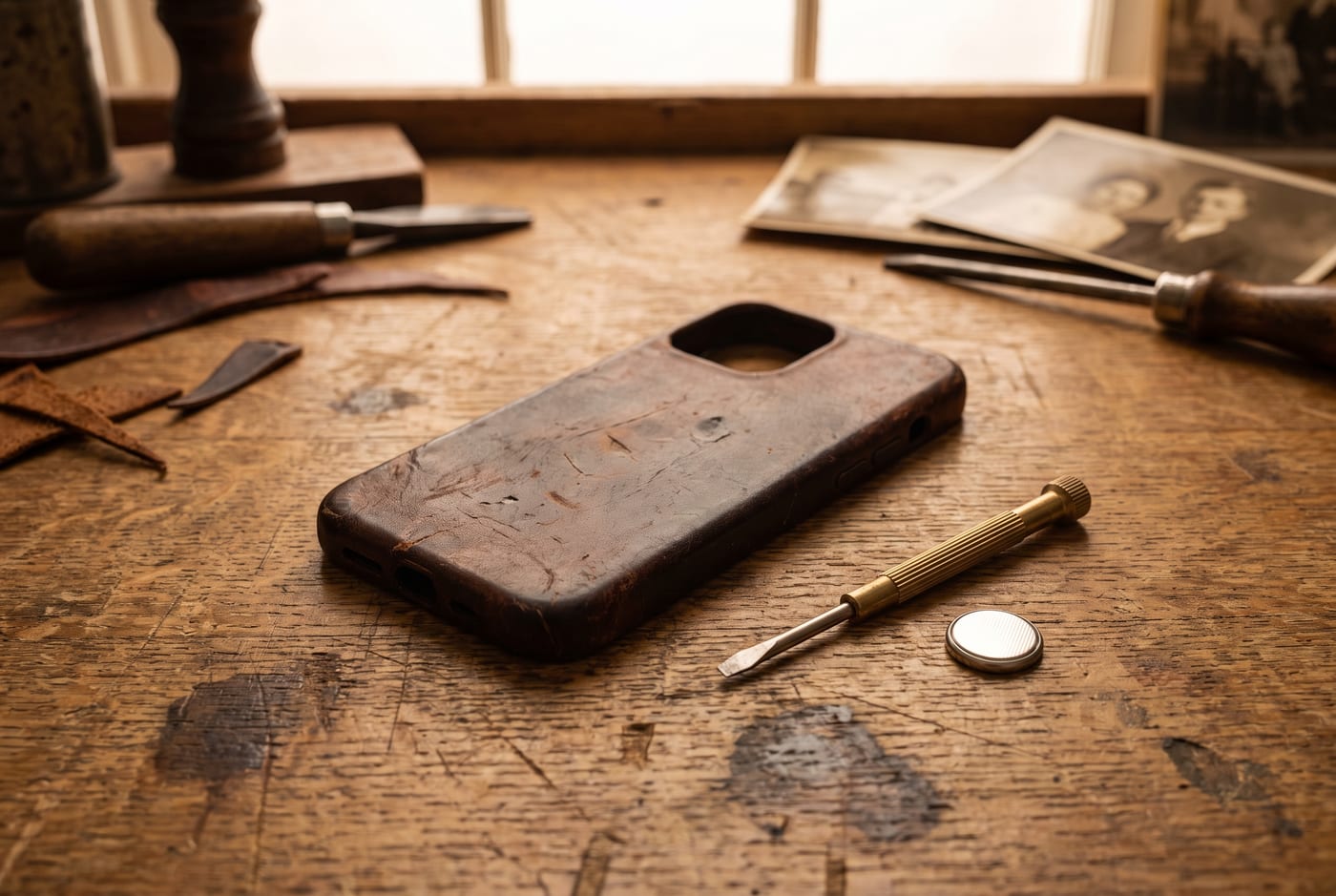
The two-year upgrade was never really a decision. It was a billing artifact. Carriers baked the price of the phone into the plan, handed you a free replacement when the contract rolled over, and a generation learned to experience twenty-four months as the natural lifespan of a working computer. The subsidies are mostly gone now. The habit stayed.
Meanwhile the hardware quietly left the habit behind. A flagship phone today is supported with software updates for six years or more, its chip is overpowered for nearly everything asked of it, and the gap between this year's model and last year's has narrowed to the width of a spec sheet. The honest description of a modern iPhone is that it is a durable good — closer to a good watch or a good pan than to the disposable gadget its upgrade cycle implies. We just haven't updated our manners to match.
The Arithmetic Nobody Runs
Run the numbers once and they stay run. A thousand-dollar phone replaced every two years costs five hundred a year, before the theater of trade-in credits. The same phone kept five years costs two hundred — and the case for five years is not heroic frugality; it's mostly one battery. Around year three, the cell that has faded into the low eighties can be replaced for roughly the price of a nice dinner, and the phone comes back from the counter feeling, in the way that matters most day to day, new. It is the single highest-yield repair in consumer electronics, and the most routinely skipped.
Battery health is the honest clock of a phone's age, so it pays to slow it: don't park the phone at 100 percent for hours, keep it off sun-baked dashboards and out of hot cars, use the charge limit if your days allow it. None of this is monkish. It's the difference between a phone that ages like leather and one that ages like fruit.
Care as a Point of View
The case is where longevity starts, and not only for the obvious reason. Yes, a dropped phone in a good case is an anecdote, and a dropped phone without one is an appointment. But the deeper effect is psychological: a cared-for object recruits care. The phone in a case you chose deliberately gets set down more gently, cleaned more often, treated as a possession rather than a placeholder for its successor. Repair technicians will tell you they can guess a phone's future from its present. The cracked screen someone decides to live with for now is rarely a pause; it's the beginning of the end, because it announces that the owner has stopped defending the object.
- A case from day one — the economics of a modest case standing between a fall and an eight-hundred-dollar repair never stop being absurd.
- The battery replaced around year three, when health settles into the low eighties. It is the cheapest new phone you will ever buy.
- Heat treated as the enemy it is: no dashboards, no pillows over charging phones, no afternoons in direct sun.
- Storage kept honest — a phone drowning in its own photos feels older than it is, and the feeling gets misdiagnosed as obsolescence.
Longevity is also, increasingly, a culture. You can see it in the repair-manual publishers, the buy-it-for-life forums, the watch collectors who taught everyone the word patina. Keeping things has acquired the glamour that replacing them used to have — the well-worn leather case has become a credential in the way the shrink-wrapped upgrade once was. This is, incidentally, where the club's whole premise quietly lives: a new case each month is a way of making the same phone feel new. Novelty at the accessory layer instead of the hardware layer, at a fraction of a percent of the price.
Your contract will end. Your plan will change. The phone, given modest care, will still be there — running the current software, holding a respectable charge, wearing its third or fourth case like a well-kept jacket. Five years is not the phone's limit. It's ours, and it turns out to be negotiable.