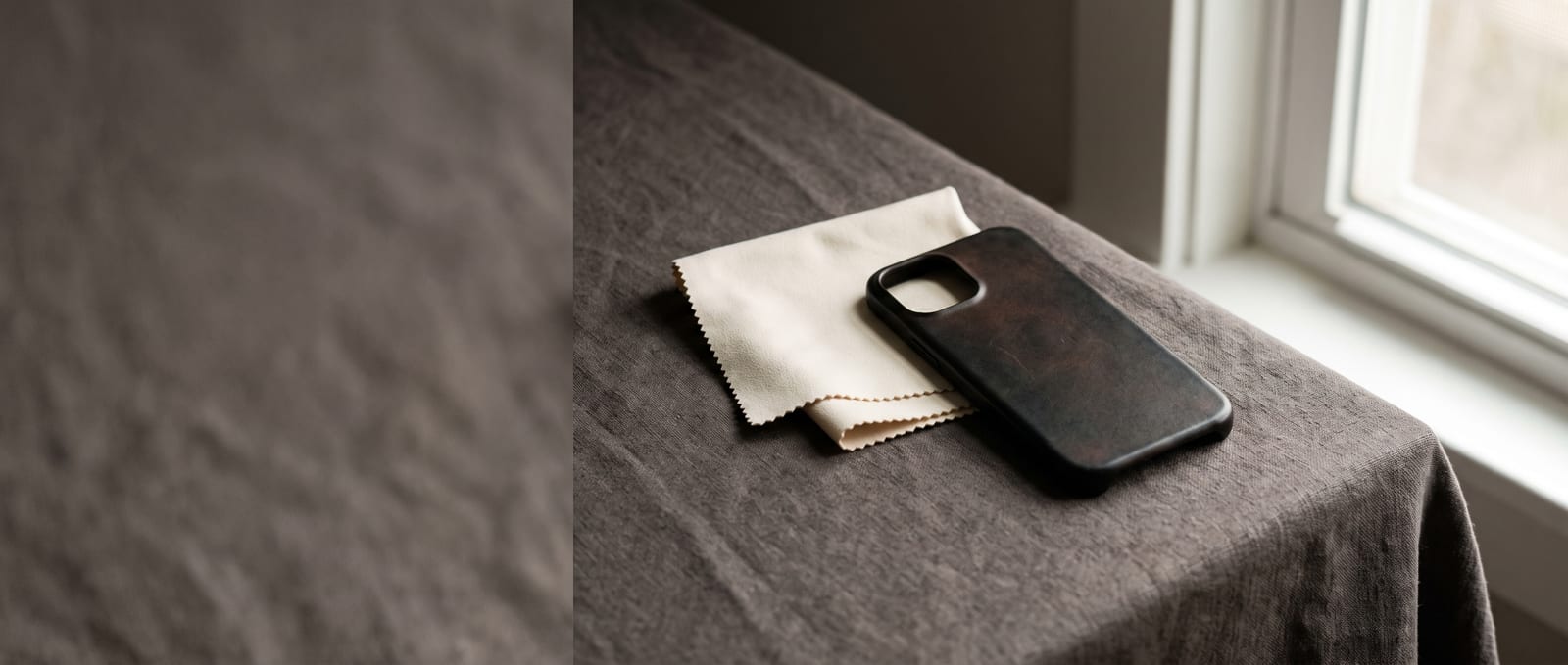
A good leather case is the rare accessory that improves with age — but only if you treat it like leather, not plastic. Skin oils, denim dye, and the occasional coffee splash all leave their mark, and the difference between a rich patina and a tired, dried-out case comes down to a habit that takes two minutes a month. Here is the routine, what to use, and what to keep far away from the hide.
What Leather Wants — and What It Hates
Full-grain and top-grain leather is tanned with natural oils and, on most cases, sealed with a light protective topcoat. Your job is twofold: keep grit from grinding into the grain, and keep those oils from drying out. Leather's enemies are simple — prolonged direct sun, sustained heat above roughly 90°F, soaking water, and solvents. Any one of them pulls moisture out of the hide or breaks down the finish, and the damage compounds quietly until it shows all at once.
- Fine for leather: a dry microfiber cloth, a barely damp cloth, mild hand soap, a colorless leather conditioner
- Risky: dish soap, saddle soap on finished leather, tinted polishes that can shift the color
- Off-limits: alcohol wipes, disinfectant sprays, acetone, household cleaners, hair dryers, and radiator tops
The Two-Minute Monthly Routine
- Take the phone out of the case and wipe both surfaces with a dry microfiber cloth to lift loose grit.
- Mix one drop of mild hand soap into a cup of warm water, dip a soft cloth, and wring it out until it is barely damp.
- Wipe the leather in light, overlapping strokes — never scrub, and never let the surface look visibly wet.
- Go over it once more with a clean cloth dampened in plain water to lift any soap residue.
- Blot dry with a towel and let the case air-dry away from sunlight for 30 to 60 minutes before the phone goes back in.
- Before reassembly, brush out the interior lining — trapped grit is what puts hairline scratches on a phone's finish.
Conditioning: Less Is More
Every two to three months, finish the routine with conditioner. Use a colorless, wax-free leather cream — a pea-sized amount covers an entire case. Work it in with your fingertips in small circles, wait 10 minutes, then buff off the excess with a dry cloth. Conditioner replaces the oils that daily handling and dry indoor air pull out of the hide. Skip it entirely and the leather slowly stiffens; overdo it and you get a tacky surface that attracts more dirt than it repels. Twice a season is the sweet spot for a case that lives in your hand all day.
What Alcohol Wipes Actually Destroy
Isopropyl alcohol is fine on glass and aluminum, which is why disinfecting wipes became a reflex for so many people. On leather they are quietly destructive: alcohol dissolves the finish coat, lifts dye out of aniline-finished hides, and strips moisture from the fibers underneath. One wipe will not ruin a case, but a weekly habit leaves leather blotchy, faded, and prone to cracking within a few months. If you want to sanitize, the barely damp soap cloth from the routine above is the answer — soap and gentle friction are what actually remove grime, and the hide survives the process.
How Patina Should Age
Patina is the point of leather. Expect the color to deepen a shade or two over the first few months, a soft sheen to develop where your palm rests, and the edges to burnish slightly. That is healthy aging, and no two cases do it the same way. What patina should not look like: a gray, dull surface, cracking at the flex points, flaking finish, or chalky white blooms. Those are signs the leather has dried out or met something harsh. Dull and dry can usually be revived with two light rounds of conditioner a week apart; cracking is permanent. Catch the warning signs early and a leather case will comfortably outlast the phone inside it.