You enter one room more often than any other, and it isn't in your house. The home screen gets opened — conservatively — dozens of times a day: after the elevator, before the kettle, in the pauses that used to belong to nothing. That's a remarkable amount of traffic for a space most people have never furnished. It just accumulated, app by app, the way a garage does.
Consider the alternative for a moment: one page. Not three, not five with a folder slum on the last. A dozen or so icons, each of which earned its place; a wallpaper you chose on purpose; a dock with — this is the flourish — a little breathing room in it. Three apps in a four-slot dock is the interface equivalent of the empty margin in a well-set book. Nothing about it is functional. Everything about it is intentional, and you can feel the intention every time you look.
The Made-Bed Argument
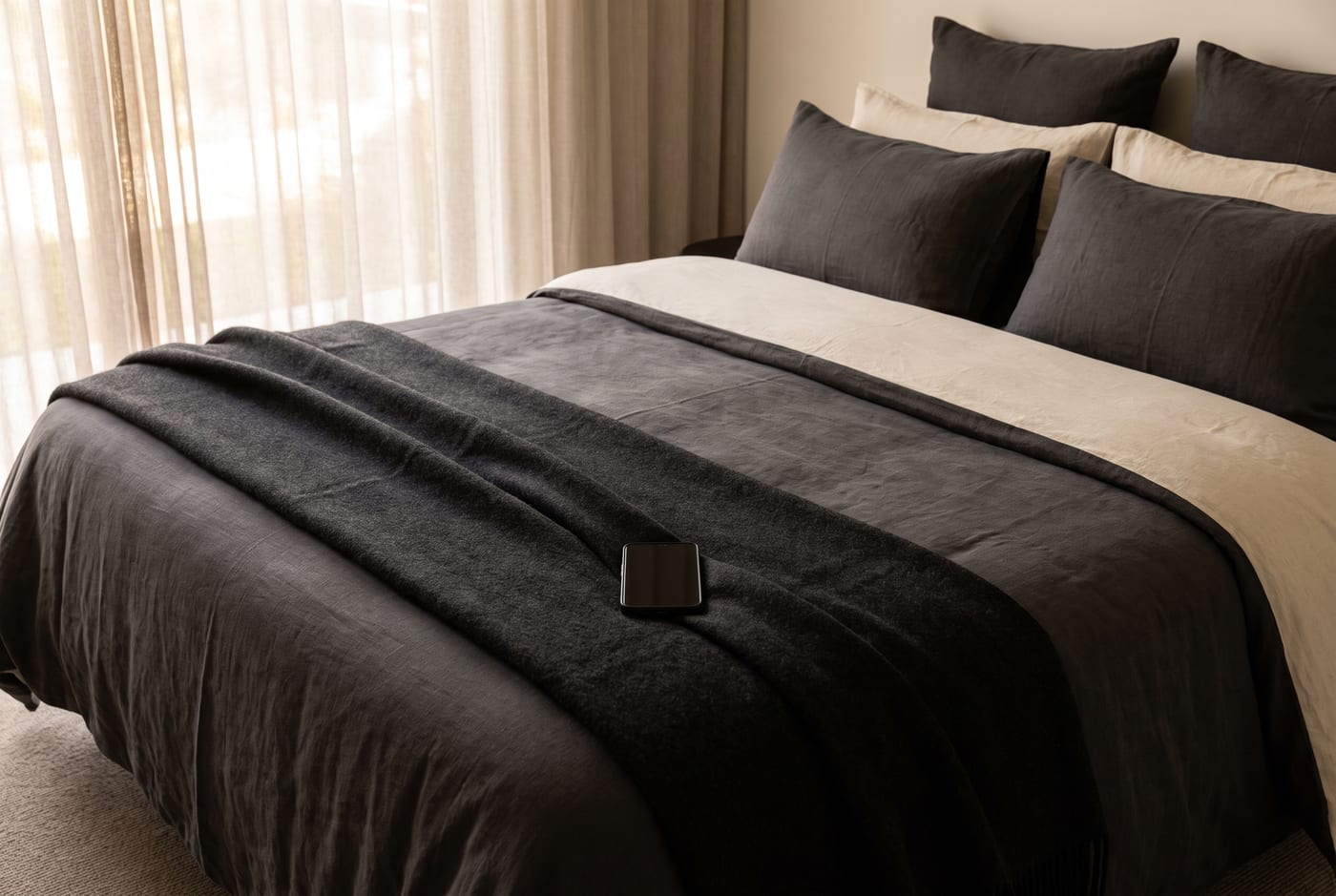
A made bed doesn't make you sleep better. That was never the claim. The claim is about the moment you walk back into the room hours later, and the room says order instead of entropy — a small standing proof that somebody lives here on purpose. The home screen works the same way, with one difference: you re-enter this room forty times a day. Whatever it says, it says forty times. A screen of badge-covered clutter delivers a tiny you're-behind with every unlock. A tidy one delivers the opposite. Neither message is loud. Both compound.
The mechanics are almost disappointingly simple, which is a point in their favor. The App Library made the home screen optional as storage — everything is always findable by search, so the grid no longer needs to be a warehouse. That single fact dissolves the hoarder's argument. An icon on your home screen is not access; it's advertising. The only question worth asking of each one is the estate-sale question: would you re-acquire this, today, on purpose?
The Edit
The edit runs like this. Keep what you open by intention — camera, messages, maps, music, the two or three tools of your actual work. Banish what opens you: anything tapped by reflex and regretted by minute three has forfeited its spot and can live in the library, one search away, which turns out to be exactly enough friction. Widgets earn their space only by answering a question you actually ask — the weather, the next appointment — not by being handsome dashboards for data you never consult. And notifications get the same audit, because a tidy grid under a rain of banners is a made bed in a room with a leak.
What's left, if you've been honest, is quiet luxury in the literal sense: expense measured not in money but in decisions. Anyone can have a full home screen; it's the default. A spare one is evidence of editing, and editing is the only real luxury software offers. It's the same principle at work when a coordinated setup comes together — wallpaper, icons, case, each one chosen, none of them shouting. Members who build a setup around a case from a drop usually discover the case was the easy part. The restraint is the work.
There's a maintenance clause, because tidiness is not an event. New apps arrive with ambitions; every install wants the front page the way every houseguest wants the good chair. The habit that keeps a made screen made is small: new apps land in the library by default, and promotion to the grid is something an app has to earn over a couple of weeks of actual use. Once a season, you walk the page the way you'd walk a room before company comes — not to purge, just to notice what crept in while you weren't deciding.
None of this makes you more productive, probably, and it's healthier to admit that than to pretend otherwise. What it does is humbler and better: it makes the most-visited room in your life reflect a decision instead of a drift. You made your bed this morning, or you didn't. Either way, you'll walk into this room forty more times before midnight. It may as well say what you'd like it to say.